Does Brushing Your Hair 100 Times Actually Help It Grow?
Quick Answer: Brushing stimulates scalp circulation and distributes natural oils, which can support a healthier growth environment, but 100 strokes is an arbitrary number — the benefit comes from gentle, regular brushing, not a specific count, and over-brushing can cause breakage that looks like slowed growth.
Your grandmother swore by 100 strokes a night. She wasn’t entirely wrong — she just didn’t know why.

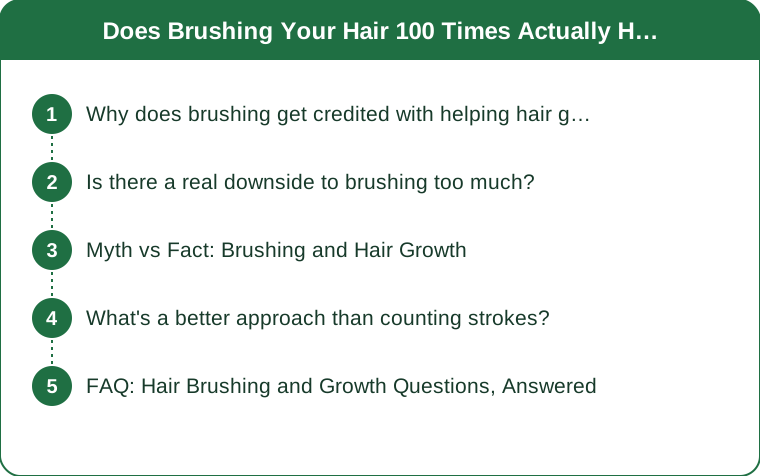
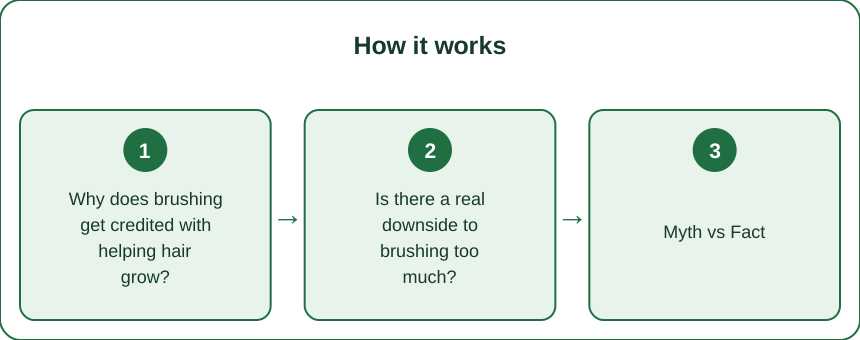
Why does brushing get credited with helping hair grow?
Because brushing stimulates blood flow to the scalp, and hair follicles rely on that blood supply for nutrients, so more circulation is genuinely linked to a healthier follicle environment.
Brushing also distributes natural scalp oil (sebum) down the hair shaft, which can reduce breakage at the ends — and less breakage often gets mistaken for “faster growth” when it’s really just less loss.
Is there a real downside to brushing too much?
Yes — 100 strokes on dry, fragile, or already-damaged hair can cause more breakage than it prevents, especially with a low-quality brush or aggressive technique.
The original advice predates modern hair care science and didn’t account for hair type or condition — fine or chemically treated hair tolerates far less brushing than thick, unprocessed hair.

Myth vs Fact: Brushing and Hair Growth
Myth: More brushing strokes means faster hair growth. Fact: hair grows from the follicle at a fixed rate regardless of brushing — brushing affects breakage and scalp health, not the biological growth rate itself.
Myth: Brushing wet hair is fine as long as you do it gently. Fact: hair is significantly more elastic and prone to snapping when wet, so brushing dry (or using a wide-tooth comb on damp hair) causes far less breakage.
What’s a better approach than counting strokes?
A gentle scalp massage with a brush for 1-2 minutes, once daily, focused on circulation rather than stroke count gives most of the benefit without the breakage risk of 100 forceful strokes.
Using a boar bristle or wide-tooth brush suited to your hair type, and starting from the ends and working up (rather than dragging from root to tip through tangles), also reduces unnecessary breakage.
FAQ: Hair Brushing and Growth Questions, Answered
Does scalp massage without a brush work just as well?
Yes — finger-based scalp massage provides similar circulation benefits without any breakage risk, making it a good option for very fragile or damaged hair.
How often should I actually brush my hair?
Once or twice daily is generally enough for both detangling and circulation benefits — more than that adds breakage risk without added growth benefit.
Can the wrong brush actually damage hair over time?
Yes — brushes with hard plastic bristles or seams can snag and tear hair, so a brush designed for your specific hair type matters more than brushing frequency.
TL;DR:
- Brushing supports scalp circulation and oil distribution, not the biological growth rate itself
- 100 strokes is an old number, not a science-backed target — quality over count matters more
- Brushing wet or fragile hair aggressively causes breakage that mimics slow growth
- A gentle 1-2 minute scalp-focused routine daily beats forceful high-count brushing
Swap the stroke-counting habit for a slower, scalp-focused minute or two — your ends will thank you.
Keep Reading
This article is for general informational purposes only and is not medical advice. Always consult a qualified health professional for guidance specific to you.