Feeding Your Hair: The Nutrition That Actually Reaches the Follicle
Hair is the body’s lowest-priority tissue — fed last, cut first when supplies run short — which makes nutrition a real hair lever and the gummy aisle a mostly-decorative one. The follicle-feeding guide: the nutrients that matter, the deficiency honesty and the plate that beats the bottle.

The Low-Priority Truth
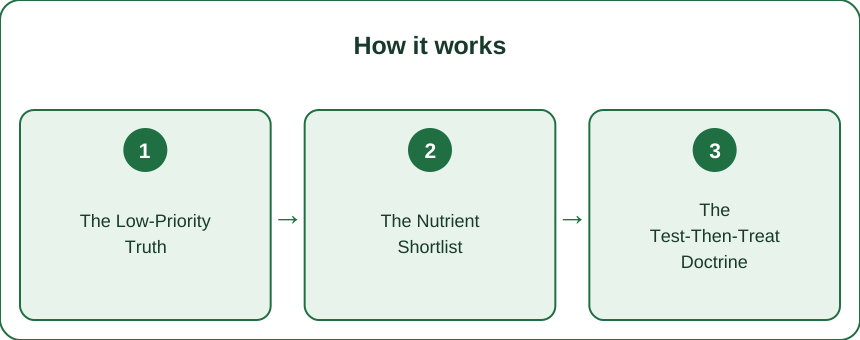
Why nutrition shows in hair: the triage biology (the body rations nutrients to vital organs first — hair’s supply gets cut early in any shortage; the shedding that follows crash diets and deficiency states by two-to-three months is the triage visible), the growth-cost reality (hair is protein built daily — the under-eating and under-protein patterns bill the follicle directly; the restrictive-diet hair story is textbook), and the lever honesty (nutrition RESTORES hair that shortage suppressed — it doesn’t override genetics or hormones; the deficiency-corrected shedding recovers, the pattern-thinning needs the professional chapter; knowing which story is yours is the whole game).
The Nutrient Shortlist
What follicles actually order: protein leads (hair IS keratin protein — the daily anchors from the protein chapters are hair care; the under-protein population’s hair notices within months), iron follows closely (the most common deficiency behind women’s shedding — the ferritin conversation from the fatigue chapter belongs to hair too; heavy periods and low ferritin and thinning hair travel together), the supporting minerals (zinc’s follicle role, the vitamin-D association — the test-then-treat tier), the biotin honesty (the famous hair vitamin is rarely deficient — the biotin-gummy industry treats a shortage most people don’t have; the mega-doses also skew lab tests, a genuinely underknown problem worth telling your doctor about), and the omega-and-produce layer (the scalp-and-shine support of the fatty-fish-and-colorful-plate pattern — the anti-inflammatory eating that skin and scalp share).

The Test-Then-Treat Doctrine
The order that works: the bloodwork-first rule (the shedding complaint’s first stop is ferritin, thyroid, vitamin D — the fatigue panel doubling as the hair panel; the deficiencies found get real dosing, the ones absent get skipped), the supplement honesty (the hair-gummy multivitamin approach treats everything weakly and the actual gap strongly-never — the targeted repletion beats the shotgun; and the more-is-better instinct fails here too — excess iron and mega-biotin both cause their own problems), the timeline patience (hair responds on its growth cycle — the corrected deficiency shows in reduced shedding within months and visible density in six-plus; the follicle works quarterly, not weekly), and the professional line (shedding that’s sudden, patchy or persistent despite normal labs is dermatologist territory — the pattern-thinning treatments exist and work best early).
The Plate Architecture
The daily hair diet: the protein anchor at every meal (the 25-30g rhythm — hair’s raw material on schedule), the iron-plus-C pairing (the absorption trick from the pregnancy-iron chapter — the lentils-with-peppers habit), the twice-weekly fish (the omega tier), the seeds-and-nuts sprinkle (zinc and the minerals in snack form), and the crash-diet warning made explicit (the rapid-loss diet’s hair bill arrives at month three — the shedding that follows aggressive restriction is predictable; the sustainable-deficit chapter’s approach protects the hairline too). Fed first through the plate, tested before supplementing: the follicle, funded.
Protein daily, ferritin tested, biotin mostly marketing, crash diets bill the hairline. Hair nutrition is deficiency correction plus patience — the plate outperforms the gummy aisle.
Keep Reading
This article is for general informational purposes only and is not medical advice. Always consult a qualified health professional for guidance specific to you.