Does Scalp Massage Actually Grow Hair, or Is It Just a Trend? What the Evidence Shows
Quick Answer: Scalp massage shows modest but real evidence for supporting hair growth, primarily by increasing blood flow and mechanically stretching hair follicle cells, but the effect is gradual and works best as a supplement to other hair health habits, not a standalone solution for significant hair loss.
Social media treats scalp massage like a guaranteed hair growth hack. The actual evidence is more modest than that, but it’s not nothing either — here’s what it can realistically do.
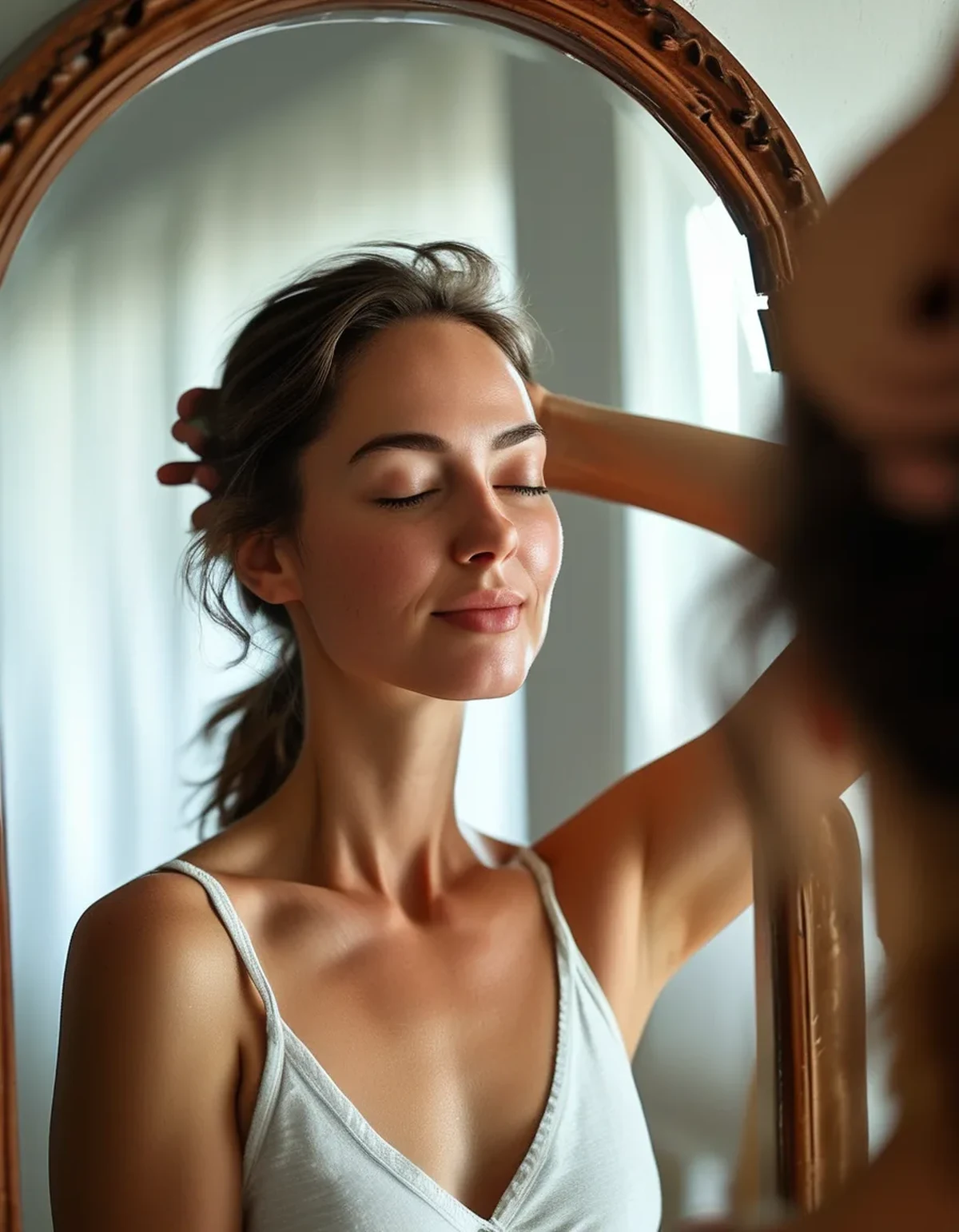
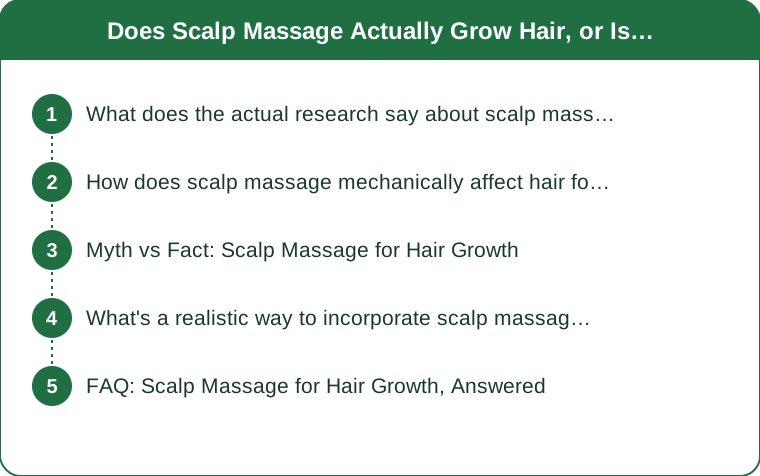
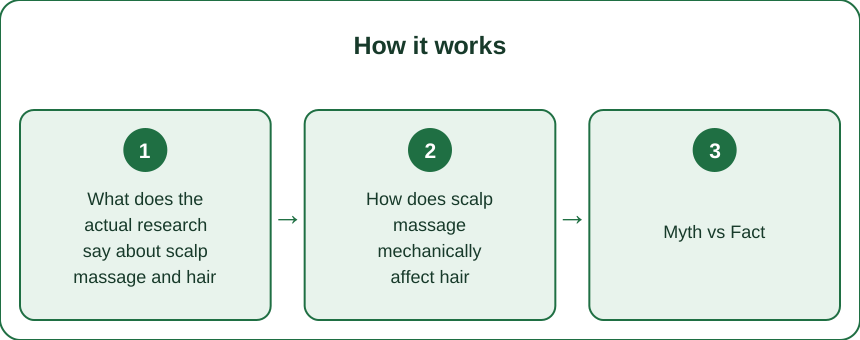
What does the actual research say about scalp massage and hair growth?
A small but frequently cited study found that consistent daily scalp massage over several months was associated with increased hair thickness, likely through mechanical stretching of the dermal papilla cells that influence hair follicle activity. The effect size was modest, and results took months of daily consistency, not days or weeks.
How does scalp massage mechanically affect hair follicles?
The proposed mechanism is that mechanical stretching stress on scalp cells triggers changes in gene expression related to hair growth, alongside a secondary benefit of increased local blood flow, which can improve nutrient delivery to hair follicles. Neither effect is dramatic on its own, but combined and sustained, they contribute measurably.
Myth vs Fact: Scalp Massage for Hair Growth
Myth: Scalp massage can regrow hair lost to pattern baldness on its own. Fact: For genetic or hormonal hair loss, scalp massage alone isn’t shown to reverse loss — it may support thickness in existing hair but isn’t a replacement for medical treatment when that’s indicated.
Myth: Massage tools with metal spikes work better than fingers. Fact: No strong evidence shows tools outperform consistent finger massage — consistency matters more than the tool used.
Myth: Results should be visible within a few weeks. Fact: Studies showing effect used months of daily consistency; short-term use is unlikely to show measurable change.
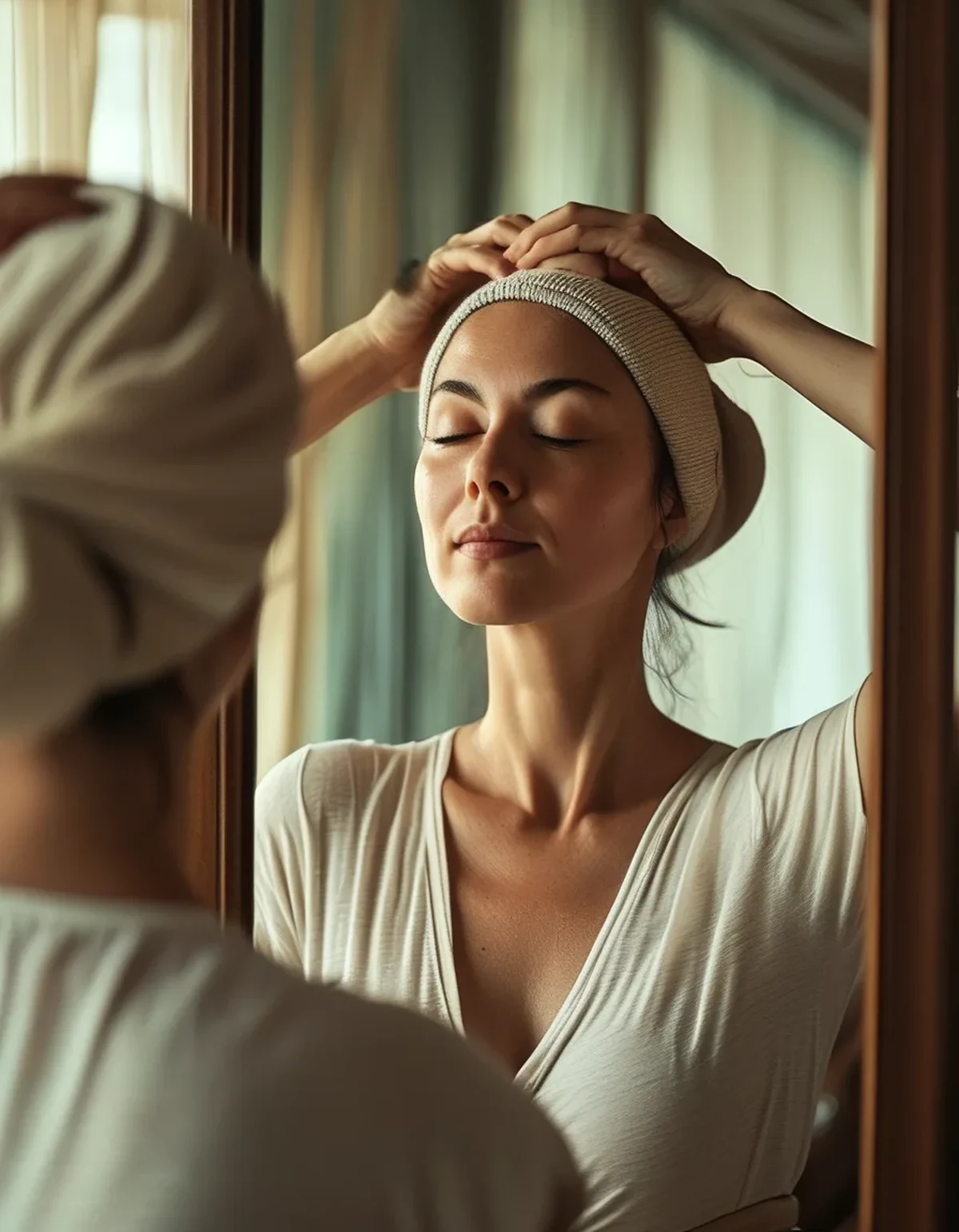
What’s a realistic way to incorporate scalp massage for potential benefit?
4-5 minutes daily, using fingertips in firm circular motions across the whole scalp, done consistently for at least 3-4 months before evaluating results, offers the best evidence-aligned approach. Combining it with other supported hair health habits (adequate protein, addressing any nutrient deficiencies) is more likely to show noticeable results than massage alone.
FAQ: Scalp Massage for Hair Growth, Answered
Does scalp massage help with hair loss caused by stress specifically?
It may help indirectly by reducing tension and improving relaxation, which can support overall scalp health, though it doesn’t directly address the hormonal stress-shedding mechanism itself.
Is it possible to massage too hard or too often?
Excessive force can cause irritation or, in rare cases, contribute to hair breakage from friction — firm but gentle pressure is the general guidance.
Should scalp massage be done on wet or dry hair?
Either works for the growth-related benefit; wet hair with conditioner can add slip that some people find more comfortable, but it doesn’t change the underlying mechanism.
TL;DR:
- Modest evidence supports scalp massage improving hair thickness through mechanical stretching and blood flow
- Results require months of daily consistency, not days or weeks
- It’s not a standalone fix for pattern hair loss and works best alongside other hair health habits
- Firm, gentle finger massage works as well as specialized tools according to current evidence
Scalp massage isn’t a myth, but it’s also not a shortcut — it’s a slow, cumulative habit with real but modest support behind it.
Keep Reading
This article is for general informational purposes only and is not medical advice. Always consult a qualified health professional for guidance specific to you.