Does a Silk Pillowcase Actually Help Hair Grow, or Just Look Healthier?
Quick Answer: Silk pillowcases don’t speed up hair growth at the follicle level, but they do reduce friction-caused breakage and frizz overnight — which makes existing hair look and feel healthier and can reduce the appearance of thinning caused by breakage, not slow growth.
You bought the silk pillowcase because every ad promised faster, thicker hair growth, and a few weeks in your hair does look a little better — just not for the reason the marketing implies.

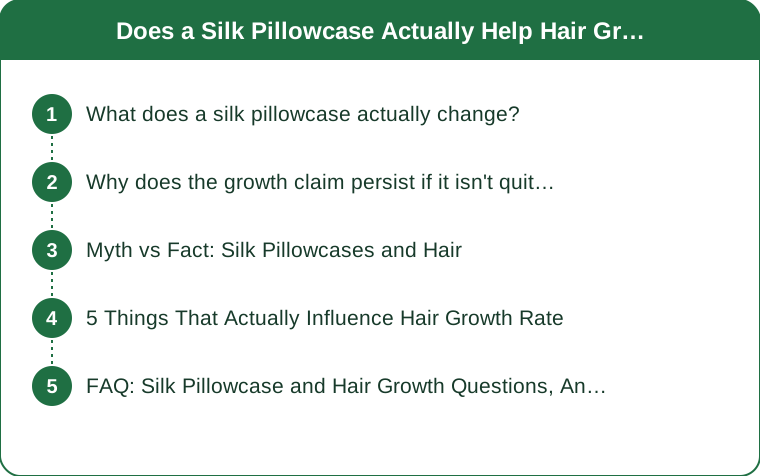
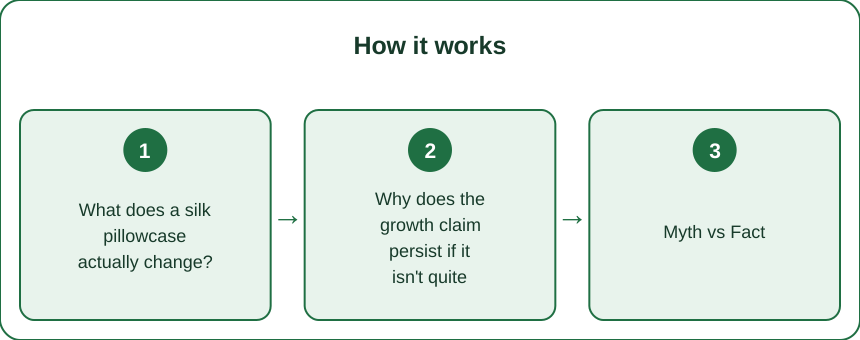
What does a silk pillowcase actually change?
Silk’s smoother surface reduces friction between hair strands and the fabric compared to cotton, meaning less mechanical breakage and tangling while you sleep and toss around. Less breakage means the hair you already have stays intact longer, which reads as ‘healthier, longer-looking hair’ over time — but it’s preservation, not new growth.
It also holds slightly less moisture from your hair than cotton does, which can mean less overnight dryness and frizz for some hair types, particularly those prone to dehydration or static.
Why does the growth claim persist if it isn’t quite accurate?
Hair growth happens at the follicle, under the scalp, driven by blood flow, hormones, genetics, and nutrition — none of which a pillowcase fabric can influence from the outside. The confusion comes from the fact that less breakage genuinely does make hair appear to grow faster, since you’re not losing length to snapping and split ends as quickly.
Marketing leans into this because ‘reduces breakage’ is a less exciting claim than ‘grows hair faster,’ even though the breakage-reduction benefit is real and worth having on its own.

Myth vs Fact: Silk Pillowcases and Hair
Myth: Silk pillowcases make hair grow noticeably faster from the root. Fact: They reduce breakage and frizz, which preserves length rather than accelerating actual follicle growth.
Myth: Any ‘silky’ synthetic fabric gives the same benefit as real silk. Fact: Genuine silk and satin do reduce friction well, but cheap slick synthetics can shift around too much during sleep, partially undercutting the benefit.
5 Things That Actually Influence Hair Growth Rate
1. Genetics — your baseline growth rate is largely inherited and hard to meaningfully change.
2. Scalp blood flow, supported by scalp massage and general cardiovascular exercise.
3. Protein and micronutrient intake, particularly iron, biotin, and adequate overall calories.
4. Hormonal factors, including thyroid function and postpartum shifts.
5. Reduced breakage from gentler handling, heat protection, and yes, lower-friction fabrics like silk — which is where the pillowcase actually helps.
FAQ: Silk Pillowcase and Hair Growth Questions, Answered
Is a silk pillowcase worth buying even though it doesn’t speed up growth?
Many people find it worthwhile for the breakage and frizz reduction alone, especially those with fine or breakage-prone hair.
How long before you’d notice a difference from switching pillowcases?
Most people report less morning frizz and tangling within a couple of weeks, though visible length retention takes longer to notice.
Does a silk pillowcase help skin too, or just hair?
Many people also report less overnight facial crease marks and slightly less moisture pulled from skin, though this is a milder, less-studied effect.
TL;DR:
- Silk pillowcases reduce friction-caused breakage and frizz, not follicle-level growth speed
- Less breakage makes existing hair appear to grow faster since less length is lost to snapping
- Genetics, scalp blood flow, nutrition, and hormones actually drive real growth rate
- Still a reasonable buy for breakage reduction — just not a growth-rate miracle fabric.
Keep Reading
This article is for general informational purposes only and is not medical advice. Always consult a qualified health professional for guidance specific to you.